AI Robotics Product Development Internship
Build a working robot prototype from scratch using Raspberry Pi, sensors, motors, computer vision, face recognition, generative AI, text to speech and a control app.
View Learning Roadmap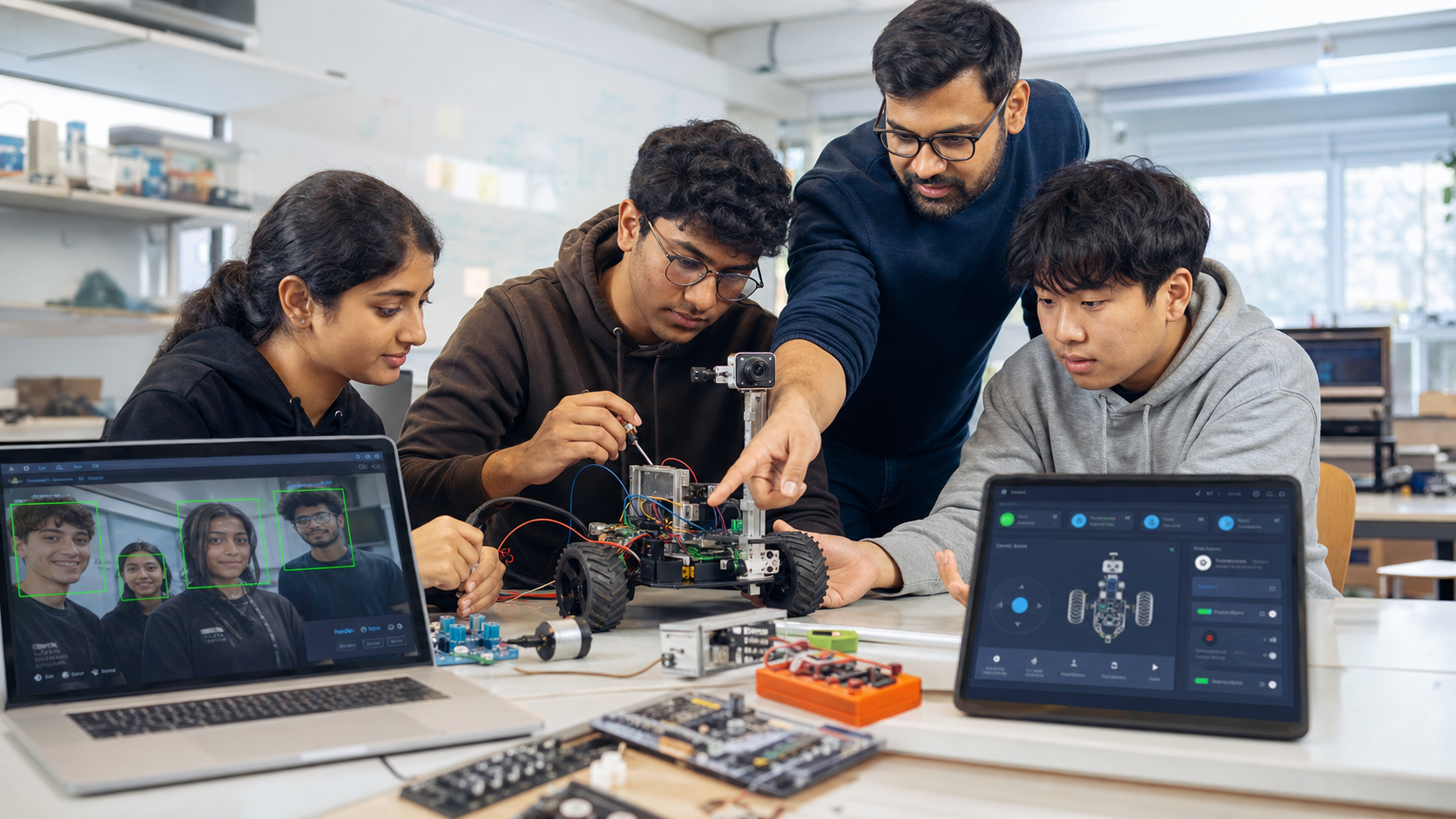
What Interns Will Build
A focused, student-friendly intelligent robot prototype that can sense, see, speak, recognize people, respond with AI and be managed from a simple app.
Robot Prototype
Assemble a chassis, connect motors, power systems, Raspberry Pi and core electronics.
Sensor Intelligence
Use ultrasonic, IR, line, touch and environmental sensors for real-time decisions.
Vision & Recognition
Add camera vision, object detection, face identification and facial recognition workflows.
Control App
Build a web or mobile app to control movement, monitor sensor data and manage robot modes.
Skills Acquired
The internship combines mechanical prototyping, electronics, embedded programming, AI integration, vision systems and product testing.
Hardware Skills
- Robot chassis assembly
- Raspberry Pi setup
- Motor drivers
- Sensor wiring
AI Skills
- Generative AI prompts
- Computer vision
- Face recognition
- Speech interaction
Software Skills
- Python programming
- Robot APIs
- App dashboards
- Testing and demos
9-Week Learning Roadmap
Crisp, sprint-based, outcome-focused journey from robot fundamentals to a demo-ready intelligent robot prototype.
| Week | Focus Area | Major Outcome | Badge Earned |
|---|---|---|---|
| Week 1 | Robotics Foundations | Understand robot anatomy, chassis design, power planning, safety, sensors, actuators and product goals. | 🏅 Robotics Explorer |
| Week 2 | Raspberry Pi & Python | Set up Raspberry Pi, Linux, Python, GPIO, camera access, Git and the robot project structure. | 🏅 Pi Developer |
| Week 3 | Motion & Sensors | Connect motor drivers, wheels, ultrasonic sensors, IR sensors and build movement control routines. | 🏅 Motion Engineer |
| Week 4 | Vision System | Add camera streaming, image capture, object detection basics and visual event logging. | 🏅 Vision Builder |
| Week 5 | Face Recognition | Build face identification and facial recognition flows for known users and visitor interactions. | 🏅 Recognition Specialist |
| Week 6 | Generative AI Brain | Connect robot context to generative AI so the robot can explain observations and choose next actions. | 🏅 AI Robot Developer |
| Week 7 | Speech & Interaction | Add text to speech, voice command handling, greeting flows, safety prompts and personality responses. | 🏅 Interaction Designer |
| Week 8 | Robot Control App | Build an app dashboard to control robot modes, movement, camera view, sensor status and AI settings. | 🏅 Robotics App Builder |
| Week 9 | Testing & Showcase | Test the full prototype, fix issues, document the build and prepare a live portfolio demo. | 🏅 Robotics Product Developer |
Robotics Foundations
Understand robot anatomy, chassis design, power planning, safety, sensors, actuators and product goals.
🏅 Robotics ExplorerRaspberry Pi & Python
Set up Raspberry Pi, Linux, Python, GPIO, camera access, Git and the robot project structure.
🏅 Pi DeveloperMotion & Sensors
Connect motor drivers, wheels, ultrasonic sensors, IR sensors and build movement control routines.
🏅 Motion EngineerVision System
Add camera streaming, image capture, object detection basics and visual event logging.
🏅 Vision BuilderFace Recognition
Build face identification and facial recognition flows for known users and visitor interactions.
🏅 Recognition SpecialistGenerative AI Brain
Connect robot context to generative AI so the robot can explain observations and choose next actions.
🏅 AI Robot DeveloperSpeech & Interaction
Add text to speech, voice command handling, greeting flows, safety prompts and personality responses.
🏅 Interaction DesignerRobot Control App
Build an app dashboard to control robot modes, movement, camera view, sensor status and AI settings.
🏅 Robotics App BuilderTesting & Showcase
Test the full prototype, fix issues, document the build and prepare a live portfolio demo.
🏅 Robotics Product DeveloperPhase 1: Foundations
Weeks 1-3 focus on robot architecture, Raspberry Pi setup, electronics, movement and sensor integration.
Robot Product Basics
- Robot anatomy
- Use case selection
- Chassis planning
- Power safety
- Sensor map
- Prototype goals
Raspberry Pi Setup
- Linux setup
- Python environment
- GPIO basics
- Camera access
- GitHub workflow
- Project folders
Motion & Sensor Control
- Motor drivers
- Wheel control
- Ultrasonic sensing
- IR sensors
- Obstacle logic
- Debugging
Phase 2: Product Development
Weeks 4-8 focus on vision, recognition, generative AI, speech and app-based robot management.
Computer Vision
- Camera stream
- Image capture
- OpenCV basics
- Object detection
- Vision logs
Face Recognition
- Face datasets
- Face identification
- Known user profiles
- Recognition confidence
- Visitor flow
Generative AI Brain
- Prompt design
- Context packaging
- Action planning
- Safety rules
- AI responses
Speech Interaction
- Text to speech
- Voice commands
- Greeting flows
- Personality scripts
- Audio testing
Robot Control App
- Robot dashboard
- Manual controls
- Mode switching
- Camera preview
- Sensor status
Phase 3: Quality, Deployment & Showcase
Week 9 prepares the intelligent robot prototype for demonstration, documentation and portfolio presentation.
Prototype Refinement
- Sensor calibration
- Motor tuning
- Recognition testing
- AI response testing
- Battery and safety checks
- Bug tracking
Final Demo Day
- Live robot demo
- Build documentation
- Architecture diagram
- GitHub portfolio
- Resume story
- Presentation practice
Certification & Career Outcomes
Interns graduate with a working intelligent robot prototype, technical documentation and a professional portfolio story.
Graduate With
- Working robot prototype
- Raspberry Pi project repo
- AI and vision integration
- Robot control app
- Internship certificate
Career Pathways
- Robotics Engineer
- Embedded AI Developer
- Computer Vision Intern
- IoT Product Developer
- Automation Prototype Engineer
Recognition Awards
- Best Robot Prototype
- Best AI Integration
- Best Vision Feature
- Best Hardware Debugging
- Best Product Demo
Ready to Build Your First Intelligent Robot?
Join Learnovate's Robotics Product Development Internship and learn by building, testing and demonstrating a real robot prototype.
Apply Now for Internship